
Free Client Management Workflow Template: AI Fillable PDF
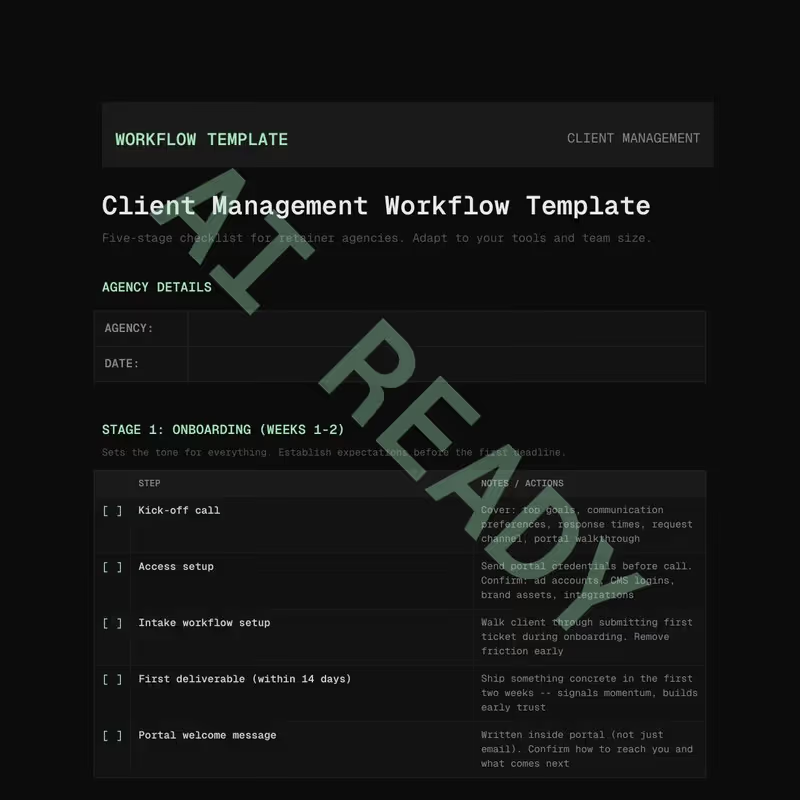
Client management gets messy when your process lives in your head. This workflow template maps the full client lifecycle from lead capture to offboarding in a structured, fillable format. It covers intake, onboarding, ongoing communication cadences, deliverable tracking, escalation procedures, and offboarding steps. Each stage includes specific actions, responsible parties, timelines, and success criteria so nothing falls through the cracks when you're running multiple accounts.
What the workflow covers
The template breaks client management into six stages. Each stage has defined inputs, actions, outputs, and handoff criteria that tell you exactly when to move to the next phase.
Lead intake
What happens between first contact and the decision to send a proposal. The workflow covers qualification criteria, discovery call structure, and the information you need to collect before scoping work. It includes a checklist so your team asks the same questions every time.
Onboarding
The first 30 days after a client signs. The workflow maps out kickoff meetings, access provisioning, tool setup, and the initial deliverable timeline. A structured onboarding reduces the "we're still getting set up" period that frustrates new clients.
Communication cadences
When and how you communicate with clients throughout the engagement. Weekly check-ins, monthly reports, quarterly reviews. The workflow specifies who runs each meeting, what gets covered, and what decisions need to happen before the next touchpoint.
Deliverable tracking
A system for tracking what's been promised, what's in progress, and what's been delivered. Each deliverable gets a status, an owner, and a due date. The workflow ties this to your reporting template so completed items flow into client reports automatically.
Escalation procedures
When things go wrong, who hears about it first? The workflow defines escalation triggers, response timelines, and resolution paths. A missed deadline has a different escalation path than a billing dispute. Both are documented so your team doesn't freeze when problems surface.
Offboarding
What happens when a client engagement ends, whether by completion, cancellation, or non-renewal. The workflow covers final deliverable handoff, account access revocation, knowledge transfer, and the exit survey. Clean offboarding protects your reputation and leaves the door open for future work.
Who this workflow is for
Agencies, consultancies, and service firms managing three or more concurrent client relationships. If you have team members who touch client work and you need everyone following the same process, this template gives them a single reference point.
It scales from solo operators to teams of 20. A solo consultant might use only the intake, communication, and offboarding stages. A mid-size agency uses all six with role assignments.
Why process documentation reduces churn
Client churn in agencies often traces back to inconsistent experience. Client A gets weekly calls and monthly reports. Client B gets sporadic updates. When both pay the same rate, Client B leaves.
A documented workflow eliminates this variance. Every client gets the same onboarding, the same communication cadence, and the same reporting structure. The quality of the work might differ by team or engagement type, but the client experience stays consistent.
How the AI-ready format works
This PDF is structured so AI tools can read the workflow stages and help you operationalize them. Drop it into ChatGPT, Claude, or any document-capable assistant and ask questions about your processes.
- Named bookmarks: All six stages are bookmarked. An AI can jump directly to "Escalation Procedures" or "Onboarding" without scanning the full document.
- Embedded schema: A structured data file inside the PDF maps every stage, action item, and role assignment. Ask "what are the onboarding steps for a new client?" and the AI pulls the specific checklist.
- Document metadata: Workflow type, subject, and keywords are written into the PDF header for categorization.
Try asking an AI: "Compare our onboarding process to best practices for agency client onboarding." It will read your actual workflow steps and flag gaps.
These contracts are provided as examples only and do not constitute legal advice. By downloading, you agree to use them at your own discretion and accept that we bear no responsibility for how they are used.