
Branding Questionnaire Templates for Agencies: AI Ready Fillable PDF (2026)
Most scope creep starts before the project does. A client thinks they want a rebrand. You think they want a logo refresh. Nobody asked the right questions upfront, and now you're on revision round four of something that should have been settled in week one.
A branding questionnaire, web design intake form, or marketing brief solves this. Not because it's a formality, but because it forces alignment before the work starts. The client has to think through what they actually want. You get the raw material to do your job properly.
Below is a complete questionnaire pack for agencies: four templates covering branding, website design, marketing, and graphic design. Each section has the full question list and a note on what each question is actually trying to surface. Copy what works. Cut what doesn't.
Quick Summary
- - A branding questionnaire captures brand purpose, audience, personality, and visual direction before any design work starts.
- - This pack includes four ready-to-use templates: branding, website design, marketing, and graphic design.
- - Keep each questionnaire to 15-25 questions. More than that and completion rates drop.
- - Send immediately after contract signing, not at the kickoff call.
- - Questionnaires work best inside a client portal where they live alongside the project timeline and contract.
What Is a Client Questionnaire (and Why Most Agencies Skip It)
A client questionnaire is the set of questions you send at project start to get what your team actually needs: audience, goals, preferences, constraints, and context. The information that should exist before anyone opens a design tool or writes a line of copy.
Most agencies skip it, or use a watered-down version, for two reasons. One: they feel awkward asking clients to fill something out. Two: they assume they'll get everything they need on the kickoff call.
Both are wrong.
Clients appreciate structure. Being asked the right questions early signals that you know what you're doing. Kickoff calls are expensive time. Using them to collect information that could have been submitted in advance wastes the call and delays the real conversation.
The common mistake isn't sending a questionnaire. It's sending one that's too long, too vague, or clearly built for every client rather than this one. Research from ManyRequests suggests keeping questionnaires to 15-25 questions max. More than that and completion rates drop. Less than 15 and you're likely missing something important.
The fix: purpose-built questionnaires per project type, sent immediately after contract signing.
Branding Questionnaire for Clients
A branding questionnaire goes deeper than a standard intake form. (Some agencies call it a brand identity questionnaire. Different name, same job.) The goal is understanding the business before you've touched a design tool: the purpose, the audience, the competitive context, the visual direction. Logistics come later.
The right branding questions to ask clients cover:
- - Business foundation: What the company does, why it exists, what it values
- - Audience: Who they serve, what those people care about, what problems get solved
- - Competitive landscape: Who they're up against and how they're different
- - Brand personality and messaging: The tone, the feeling, the words that should stick
- - Visual direction: Existing assets, inspiration, what to avoid
- - Goals and logistics: What success looks like, timeline, budget
Don't skip the "why" questions. A lot of clients have never articulated their brand story in writing before. The answers will surprise you, and they'll shape the work more than any competitor's style guide.
One more thing: question 6, the competitors question, is the one most often answered vaguely. Follow up on it. Knowing who they're trying to differentiate from shapes the whole creative direction.
Branding Questionnaire: Full Question List
- What is your company's mission or purpose, in one or two sentences?
- Why did you start this business, and what problem does it solve for customers?
- What are your three core brand values?
- Who is your ideal customer? (Include age, profession, values, and what matters most to them.)
- What problem do customers come to you to solve?
- Who are your top three competitors, and what makes you different from each?
- How would you describe your brand personality in five words?
- What emotions do you want your brand to evoke in people who encounter it?
- What tone of voice fits your brand? (Formal, friendly, witty, authoritative, or describe your own.)
- What is your Unique Selling Proposition, the one thing you do better than anyone else?
- What do you want customers to say about you after working with you?
- Which existing brands, logos, or visual identities do you admire, and what specifically do you like about them?
- Are there colors, styles, or visual motifs you love or want to avoid?
- What visual style best describes where you want your brand to go? (Minimalist, bold, playful, premium, corporate, approachable, etc.)
- Do you have existing brand assets, such as a logo, color palette, or fonts, that we should work with or build on?
- What do people currently think of your brand, and is that perception accurate?
- Which existing brand elements are not working for you and need to change?
- What marketing channels are you currently using or planning to use?
- What is your timeline for this project?
- What is your budget range for this engagement?
Website Design Questionnaire Template
A website design questionnaire needs to cover both the strategic and the practical. What the site is for, who it serves, what it needs to achieve. But also the operational reality: which pages need to exist, whether content is ready, and who has final sign-off.
The areas to cover:
- - Project goals: What the site needs to accomplish and how success gets measured
- - Audience: Who's coming to the site and what they're looking for
- - Scope and structure: Pages, content, integrations, CMS, hosting
- - Visual direction: Competitors, inspiration sites, existing brand guidelines
- - Stakeholders and approvals: Who has final say, who needs to be in the loop
- - Technical and post-launch: Maintenance, SEO requirements, ongoing support
One section most agencies underinvest in: the content question. Clients routinely assume they'll have everything ready. They rarely do. Ask explicitly whether copy and imagery exist or whether they need to be created. Build that into scope before you start, not six weeks in.
Website Design Questionnaire: Full Question List
- What is the primary purpose of this website? (Lead generation, e-commerce, portfolio, brand awareness, or other?)
- What specific actions do you want visitors to take once they land on the site?
- Who is the primary decision-maker on this project, and who else will need to review and approve work?
- What is your target launch date?
- Are we updating an existing site or building from scratch?
- What pages must be included? (List your must-haves: About, Services, Portfolio, Blog, Contact, etc.)
- Do you have copy and imagery ready, or will you need help creating them?
- What integrations are required? (CRM, email marketing, booking system, payment gateway, etc.)
- Do you have a preferred CMS, or are you open to recommendations?
- List three to five competitor websites and note what you like and dislike about each.
- List two or three websites you find visually inspiring, and explain what appeals to you.
- Do you have existing brand guidelines, logo files, or color palettes to work from?
- Who will manage the website after launch, and what level of technical knowledge do they have?
- Are there any SEO, accessibility, or performance requirements we should plan for from the start?
- What does success look like for this project, and how will you measure it?
Marketing Questionnaire for Clients
A marketing questionnaire is less about visual preferences and more about where the business actually is. What they're trying to achieve, what they've already tried, and what resources genuinely exist to work with.
The biggest trap in marketing onboarding: clients who say they want everything. More leads. Better brand awareness. Improved retention. A content strategy. A paid ads program. All at once, with a budget that wouldn't cover one of those things properly.
A good marketing questionnaire surfaces priorities and constraints before the project starts. It also documents the past. What channels they've tested, what failed, what they're still running. That context shapes everything.
Marketing Questionnaire: Full Question List
- What are your primary marketing goals for the next 12 months? (Lead generation, brand awareness, sales, retention, other?)
- Who is your target audience, and what do they care about most?
- Name three to five competitors you want to match or outperform.
- What marketing channels are you currently using, and which are delivering results?
- What campaigns or strategies have not worked in the past, and what do you think went wrong?
- What KPIs do you currently track, and which ones do you most want to move?
- What is your marketing budget for this engagement? (Monthly or total project.)
- Do you have an in-house team or other agency partners we'll be coordinating with?
- Can you share access to existing analytics or campaign reports before we start?
- Is there a specific channel, campaign, or project you want to prioritize first?
- What is your timeline for seeing meaningful results from this work?
- What would make this partnership a clear success in your eyes after six months?
Graphic Design Client Questionnaire
The graphic design client questionnaire covers some of the same ground as a branding questionnaire, but the focus is tighter. This is about producing specific deliverables, not building a brand from scratch. The questions need to establish what's being made, for whom, and what constraints exist.
What a graphic design questionnaire should cover:
- - Deliverables and scope: Exactly what needs to be produced
- - Brand context: Existing guidelines, assets, and tone
- - Audience and message: Who the designs are for and what they need to communicate
- - Style and preferences: What to aim for and what to avoid
- - Technical requirements: Print vs. digital, file formats, dimensions
- - Logistics: Deadline, budget, past design experience
Getting the technical requirements upfront saves everyone a painful conversation later. A logo designed for digital that then needs to go on a billboard at 20 feet is a problem you could have avoided with one question.
Graphic Design Questionnaire: Full Question List
- What is your company name, and what does your business do?
- What specific deliverables do you need? (Logo, brand assets, social graphics, print materials, packaging, other?)
- What is the primary goal of this design project?
- Who is the target audience for these designs?
- How would you describe your brand in five words?
- Do you have existing brand guidelines, logos, or color palettes we should follow?
- Which brands or design styles do you admire, and what specifically appeals to you about them?
- Are there any colors, styles, or visual approaches you want to avoid?
- Are designs needed for print, digital use, or both? List any known file formats or dimensions.
- Have you worked with a graphic designer before, and if so, what worked well and what didn't?
- What is your deadline for this project?
- What is your budget for this engagement?
How to Use These Questionnaires Without Annoying Your Clients
The questionnaire itself isn't the problem. How you deliver it usually is.
Timing: Send immediately after the contract is signed, as part of a welcome packet. Waiting until the kickoff call to mention it creates delays and signals poor planning. Clients who signed two weeks ago and haven't heard anything since are already anxious.
Format: Skip the email attachment. A fillable form, whether through Typeform, JotForm, or a client portal, takes less effort to complete and creates a searchable record instead of a lost thread in someone's inbox.
Portal vs. form vs. email: If you use a client portal, embed the questionnaire there. Clients answer in context, alongside the project timeline and their contract. It feels like part of the process, not a homework assignment. If you're not using a portal yet, Typeform is a reasonable step up from Google Forms for anything client-facing.
Instructions: Tell them why the questions matter. One line at the top: "Your answers help us get the project right from day one and avoid back-and-forth later." That's enough.
Follow-up: Set a completion deadline (three to five business days is reasonable). Send one reminder if needed. Assign a named contact the client can reach out to with questions. Don't chase endlessly; if a client won't complete a questionnaire, that's useful information too.
Frequently Asked Questions
How long should a client questionnaire be?
Keep it to 15-25 questions for most project types. More than that and completion rates drop. Save deeper discovery for the kickoff call, once the basics are captured.
When should I send the questionnaire?
Immediately after the contract is signed. It should be part of the welcome packet, not something you remember three days before the kickoff call.
What if clients leave questions blank?
Follow up once, by name, on the specific questions that matter most. Don't resend the whole form. If a question is truly optional, make that clear upfront.
Should I use the same questionnaire for every client?
No. You need at minimum a separate version per project type: branding, web, marketing, graphic design. Within those, customizing for industry or client size makes a visible difference to how clients experience working with you.
Can I combine questionnaire types?
Sometimes. If you're running a full rebrand plus website redesign, combine the branding and web questionnaires, but cut questions that overlap. The goal is to get the information once, not ask the same thing twice in different sections.
What Comes After the Questions
Questionnaires are the first step in a structured onboarding process, not a one-off email attachment. When they live inside a client portal, they're part of a client's first experience with your agency: log in, see the project, complete the brief, check the timeline. It reads like a professional operation, not a freelancer sending a Word doc.
Sagely (getsagely.co) is built for exactly this. It gives agencies a branded client portal where questionnaires, approvals, files, and communication all live in one place. No more hunting through emails for answers. No more clients unsure where to send things.
If you're running questionnaires via email or scattered Google Forms, that's the friction point worth solving first. See also client-portals-for-agencies and agency-client-onboarding-the-process-most-agencies-skip.
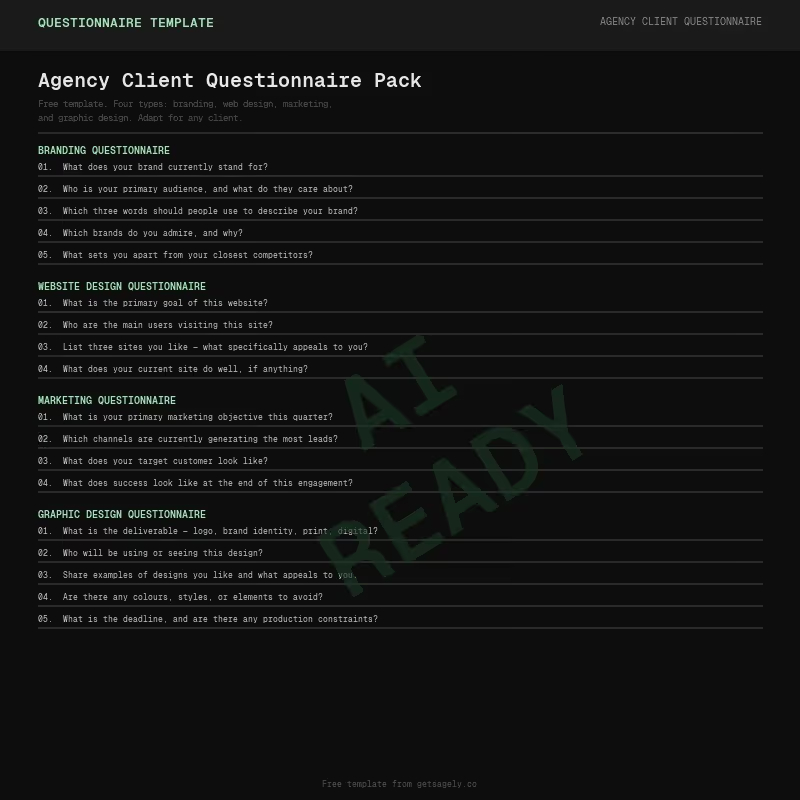
How the AI-ready format works
This questionnaire pack is structured so AI tools can help you customise it for specific clients. Drop it into ChatGPT, Claude, or any document-capable assistant and ask it to tailor the questions for a particular industry or client type.
- Named sections: Each questionnaire type is clearly labelled. An AI can jump directly to "Website Design Questions" without scanning the full document.
- Structured format: Questions are numbered and grouped by theme. Ask an AI to remove questions that don't apply to your project type and add industry-specific ones.
- Fillable fields: All answer sections are fillable. Complete with a client and the AI can help analyse the responses to flag risks or identify scope gaps.
Try asking: "Based on this questionnaire, what are the three biggest risks in this branding project?" It will read the client's answers and give you a structured risk summary.
These templates are provided as examples only. Adapt them to your specific agency context and client needs. We bear no responsibility for how they are used.